Confirm surface, rooms, layers and anything that stays.
Services
Glue-Down Carpet Removal
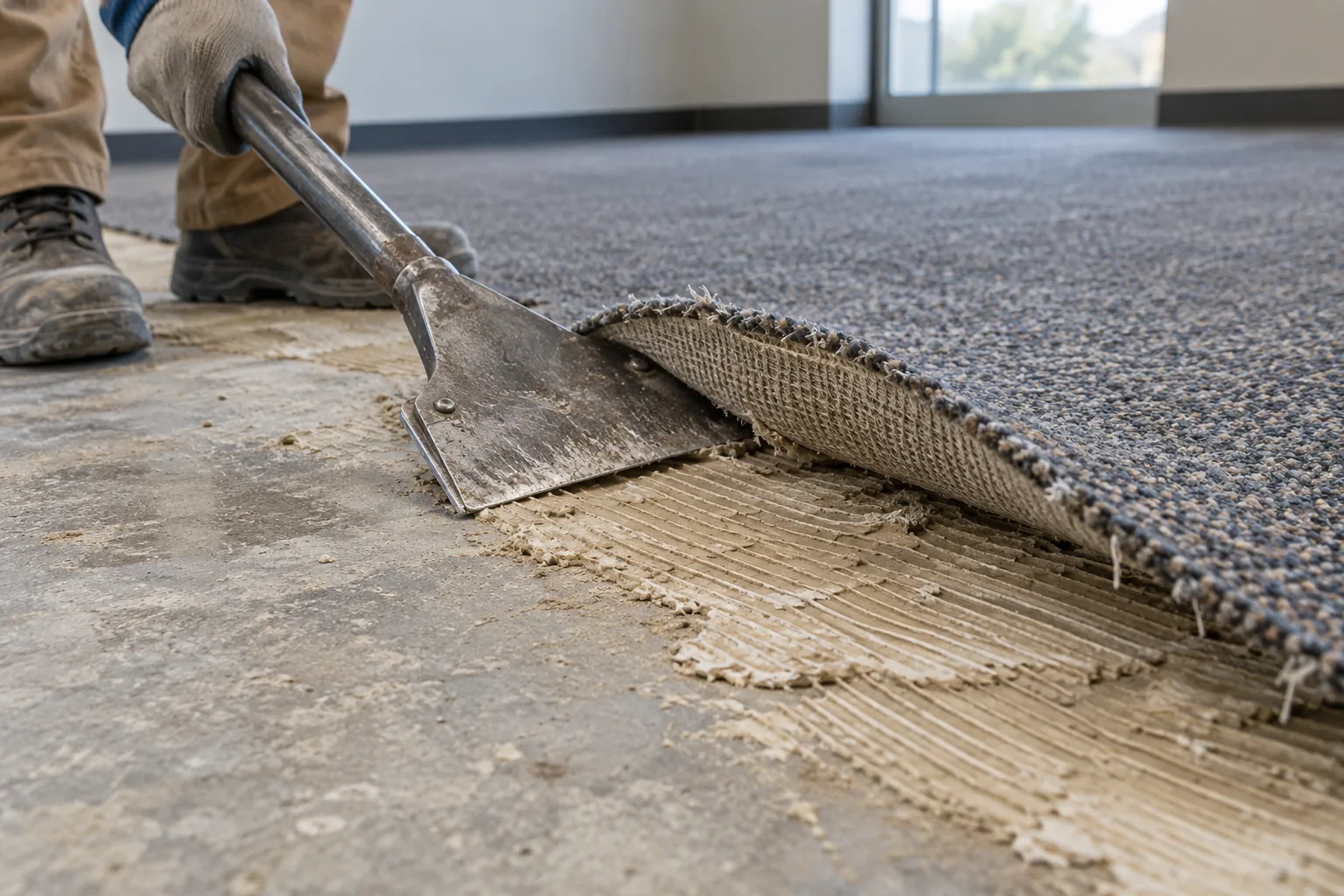
Direct-glue carpet and broadloom can release differently across the same floor. CleanFlow evaluates accessible edges, backing, adhesive and substrate before defining the removal boundary.
Removal checklist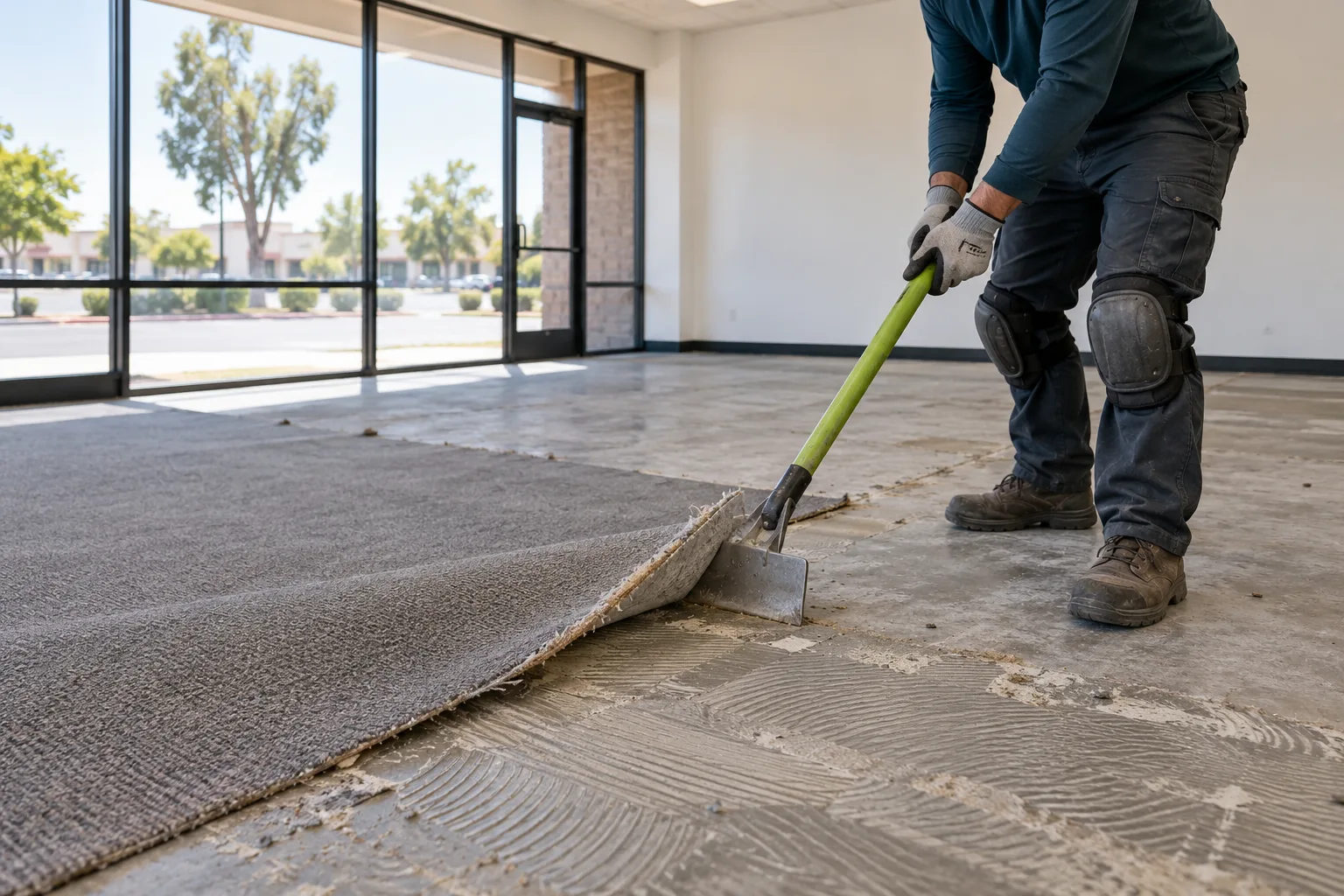
Included when it is in the written scope
- Approved glued carpet or broadloom sections
- Mechanical lifting of the bonded carpet layer
- Rolling or bundling removed material
- A clear surface for inspection after removal
Separate work unless confirmed
- Chemical adhesive stripping unless written into scope
- Grinding, shot blasting or floor leveling
- Testing or abatement of regulated materials
- Subfloor coating or new-floor preparation
What shapes the estimate
- 1Adhesive bond and carpet backing
- 2Concrete, wood or other substrate
- 3Room size and number of cut lines
- 4Residue standard required by the next contractor
A clean handoff in four moves
Protect access and decide where removed material will travel.
Cut, lift and bundle the approved material without mixing scopes.
Clear loose debris and let the next trade inspect the exposed substrate.
Companion guide
How to Plan for Glue-Down Carpet Removal
Bond strength, backing and the residue standard matter more than the carpet color or room count.
Read the field noteQuestions to settle before scheduling
Does removal include every tack strip and staple?
Only when the written scope says so. The next flooring installer may want some components retained, and completely removing adhesive residue may be a separate task.
Will the subfloor be ready for new flooring?
Removal exposes the substrate for inspection. Repair, leveling, moisture testing, sanding and coatings are separate unless provided by the appropriate contractor.
Can damaged or wet carpet be removed?
Describe the source and condition first. Active leaks, visible growth or suspect regulated material need the correct assessment before ordinary tear-out proceeds.
Make the handoff easy to inspect
Bring room measurements, installation photos and the next contractor’s instructions to the estimate conversation.